
Author: Jeffrey Heck
Whose idea was the neckerchief?
We all know that Baden-Powell gave us the neckerchief. It is such an emblematically British accoutrement, right?
Or is it?
Baden-Powell had taken to wearing a neckerchief before the famous Siege of Maefking, where the journalist Win
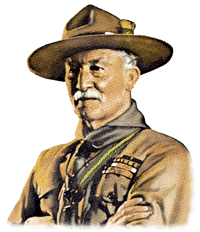
ston Churchill helped make the general famous.
In fact, Baden-Powell made the neckerchief and his famous campaign hat part of the South African Constabulary (law enforcement department) when he was re-assigned to South Africa later. The newly formed Canadian Mounted Police visited Baden-Powell in South Africa and adopted the campaign hat as part of their new uniform.
But where did BP come up with the neckerchief and campaign hat?
BP had become friends years earlier with a chap he had met while BP was serving in southern Africa. This chap was named Fred. BP was taken with Fred because Fred was an extraordinary army scout. Fred was able to bring back robust and detailed reports on the movement of the enemy, the lay of the land, and other useful intelligence.
While BP had already written a book on military scouting, BP still learned many skills about scouting from Fred. In fact, as a result of many of these lessons, BP went back and revised his previous army manual to issue the new Aids to Scouting. This book is what later attracted so many young boys to BP when BP returned to England from Maefking.
BP had been impressed with Fred’s technique, but he was also impressed with Fred’s ubiquitous campaign hat and neckerchief. Fred would explain that the hat and neckerchief were very useful for a scout. The neckerchief kept the sun off the back of his neck and allowed him to stay cool. The hat kept the sun out of his eyes and off of his head.
So who was this Fred to whom we owe the iconic hat and neckerchief?
More on this mystery next week . . . .
International Counselors at Camps
Every year the Crossroads of America Council’s International Committee sponsors two counselors from overseas to staff at Camp Ransburg and Camp Krietenstein.
This year we have a young lady from England at Camp Ransburg. She is serving as a Ridge Commissioner. She is enjoying herself thoroughly.
We also have a young man from Taiwan at Camp Krietenstein. He is working in the ecology area, if memory serves. He is amazed by the amount of land that we have dedicated to a boy scout camp at Camp K West.
Please make sure to get to know them and make them feel welcome.
Firecrafter Report: Week 4
Unfortunately, we have no troops at Ransburg this week. That means that I did not get the report from there this week.
I did visit Camp Krietenstein. They have 7 candidates this week. Two are campers the rest are staff. One of the staffers was their international counselor from Taiwan. He was working hard to start a fire with the American methods.
Firecrafter report: week 3

Here’s a midweek report for Ransburg. (If you have any information from camp Kricktenstein, please let me know.)
Summer Camp Advice for Adults
As we are in the midst of summer camp season, it is always good to have a refresher on how to make summer camp great.
Bob White Blather rounds up several articles on summer camp. Follow the links and learn.
June 2016 Eagle Report
 Congratulations to the following scouts who passed their Eagle Boards of Review on June 8, 2016! (This will be their date in rank, once ratified by the National Council’s Advancement Team.)


Unit Emergency Preparedness
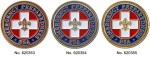 Do you know about Emergency Preparedness BSA? This is not just a merit badge or belt loop. It is for Cubs, Scouts, Venturers, Scouters, Units, and Districts.
Now what can you imagine we can do in your unit or as a district?
Roundtable Literature: Cubs
At the last Roundtable, we discussed using the National Den Award in your den. The National Den Award is a program of incentives and criteria for a healthy and active den. Many of its criteria are both a list of activities and meetings to attend and attendance goal.
Dens that complete this receive a ribbon to put on their patrol flag or a den doodle.
Two of the most important criteria are B.1. and B.2.:
B.1. Use the denner system within the den.
B.2. In a Tiger den, use shared leadership and rotate the boy/adult host team.
These lead to questions, such as “What is the Denner System?” and “What is shared leadership?”
The Denner System is the age-appropriate youth leadership part of Cub Scouting. It gives a boy a part of the responsibilty for running meeting and events. It takes some work from the adult Den Leader to teach the system, but the payoff comes in the following months’ meetings. The Cub Scouts will grow in independence and self-reliance.
Shared leadership is the process of having each family in the den taking responsibility for a meeting or two. This creates an expectation of participatin from the parents. The limited scope of responsibility allows the adults to experience success in a scout leadership endeavor that is quickly started, heavily scripted, and rapidly concluded. The result is that the adult partner finds that Cub leadership is not difficult to organize. The boys as a group require some effort to keep focused and active, but the adult partner is fully capable of the challenge. With the challenge completed, they are more likely to accept the next task put before them.
Look at the criteria on the linked checklist to see how your den can achieve the National Den Award.
 CAC North Star Unofficial Website
You must be logged in to post a comment.