
Commissioner Service
Roundtable is coming! Roundtable is coming!
 (UPDATED 8/31/15: Major changes to agenda. Old agenda deleted as appropriate.)
At Roundtable on Thursday, September 3rd, 6:30 pm, we will be very busy.
Cubs will be talking about planning for District Rocket Launch on Saturday, September 12th. It is tentatively scheduled for Camp Belzer. The Pack leaders will receive their rocket engines at the Roundtable. We will have our Launchmaster present to discuss the protocols and processes for the morning.
Scouts will be discussing the upcoming Camporee.
Commissioner at coffee
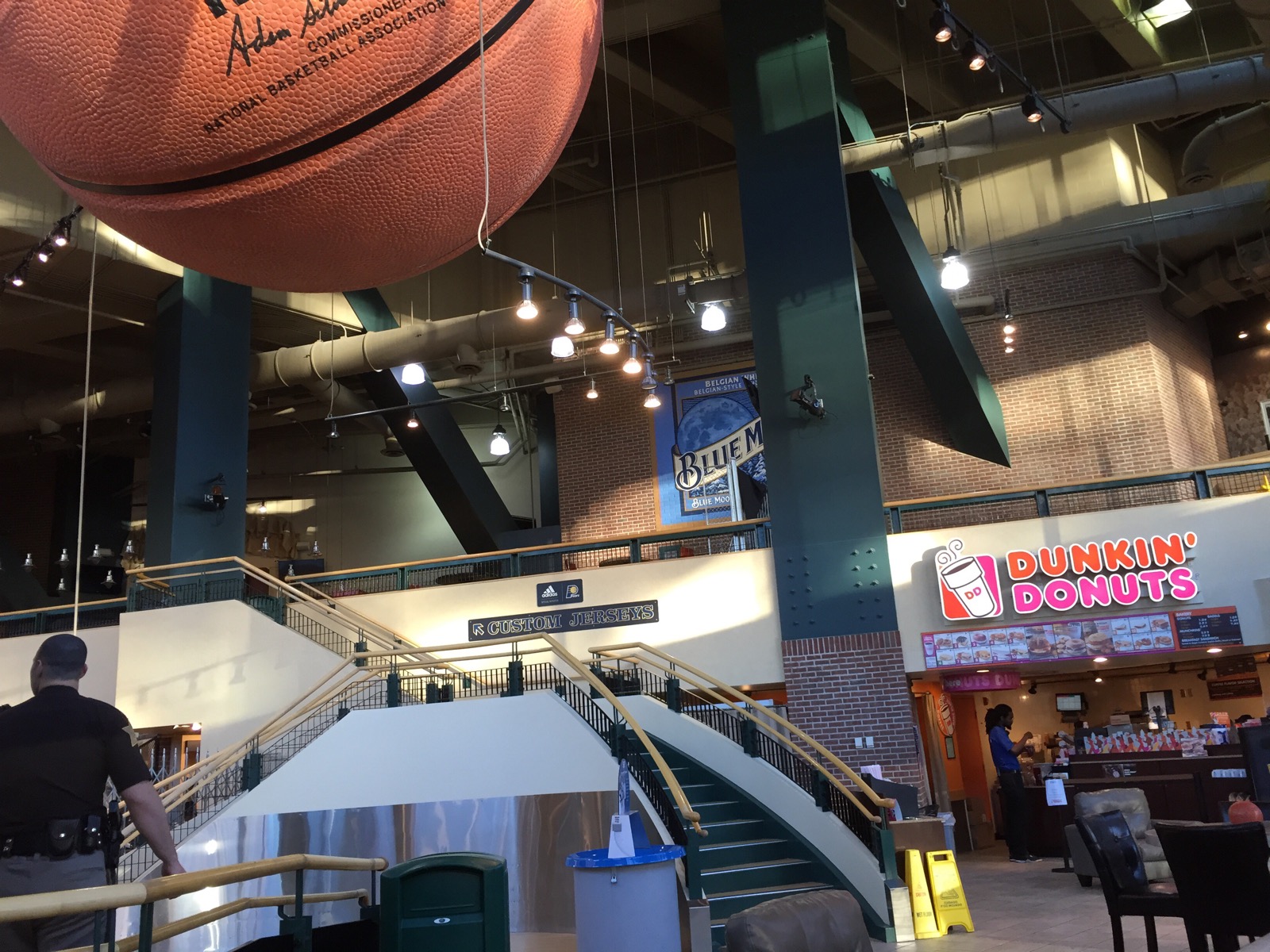
Today, Tuesday, August 25, our Commissioner Jeff Heck is available of coffee at Bankers Life Fieldhouse . We will be there until 9 AM. Come join him.
REMINDER: Commissioner’s Coffee Wednesday
District Commissioner Jeff Heck will be at Moe & Johnny’s (former Bulldog) coffee shop from shortly after 7:30 am Wednesday to 9:00 am. This is like a casual conversation or open office hours. No agenda. No expectations. Just come and chat or ask questions.
5400 N. College Ave, Indianapolis, IN 46220.
Onslaught of Autumn Training
As we head into a hectic autumn of scouting, it is easy to forget to get trained. We shouldn’t, since it is often required to be Rechartered.
Several districts and council have scheduled training in many locations at many times. This is especially true of Pathfinder’s Mini University of Scouting on Saturday, August 29th on the southside and Council’s position-specific blitz in August, September, and October at the Scout Service Center. A new list of courses is now available on a new website at http://www.crossroadstraininghub.com/events/events.htm. Units and districts can now post their own additions to training for the benefit of all in the Council.
Some of these trainings are available online, too, at my.scouting.org. 
Small unit, small committee
As we go into the fall and prepare for rechartering, the district is putting a greater emphasis on making sure we have properly aligned and functioning pack and troop committees. This does not mean that all unit committees need to be of equal size.
Smaller units have fewer parents to recruit from. This means inherently smaller committees. While the Boy Scouts of America system is extremely top-heavy and presumes each individual committee member has limited responsibilities, that is not always the case. In smaller units, sometimes one committee member will be the point of contact for district or council for several different subjects.
The unit committee structure only presumes a small handful of people. Units may choose to have larger committees with greater specialization. A smaller committee means that one person may handle all membership issues. Over the course of the year, this one unit committee member may be contacted by several specialized scouters from District or Council, including Webelos-to-scout transition, spring recruitment, fall recruitment, and retention. That does not mean that the unit needs to subdivide those membership issues the same way the District does.
Need to Schedule Self-Assessment Meeting
This year, the Journey to Excellence (“JTE”) scorecard will be required in Rechartering. In April District Commissioner Jeff Heck emailed a link to a self-assessment form to each unit. An article about this email was posted on this blog.
JTE and the self-assessment are two parts of the same process . National council’s goal with JTE is to encourage units to become more self-aware of what elements of their programs work well and what elements need a boost. JTE scorecard is designed to help units see where these elements in a simplistic scoring method. The self-assessment is designed to take those simplistic scores and translate them into actions that improve the unit in a meaningful way.
Let’s take a look at what has been recent experience versus how this process is supposed to work. We will use the example of a Cub Pack.
Before JTE and self-assessments, the Pack Key 3 (i.e., Chartered Organization Representative (“COR”), Pack Committee Chair, and Cubmaster) were expected to sit down and agree on the principles and personnel used to run the Pack. They were expected to read through all of the manuals for Cubmasters, Committee Members, and COR and figure out what needed attention. What often happened is that some of the Key 3 had read everything, some had read only what applied to them, and others read nothing. When the Key 3 did meet, there was no clear agenda on what the Pack’s principle focus for improvement should be.
 Where a Unit Commissioner was assigned to the Pack, the Commissioner would sometimes offer some verbal guidance or an outline on how to proceed. More often than not, especially in North Star District, the Pack Key 3 neither knew what a Commissioner was or who was assigned to the Pack.
With the new JTE and self-assessment combination, the Pack is asked to have a dedicated meeting for the Pack Key 3 and the Unit Commissioner every six (6) months. The agenda is to review the a self-assessment form with focus on identifying the Pack’s strengths and weaknesses today and designing a plan for improvement over time. The self-assessment form emphasizes identifying specific areas that a healthy pack needs to thrive. Within those areas, the Key 3 are asked to describe what specific tasks that they would like to undertake, who will be delegated primary responsibility, and when the deadline for completion will be.
This process is designed to mimic the business planning processes of any healthy organization. The process is broad in scope of what needs to be reviewed. The process is systematic in its regular method of assessment to avoid complacency or reckless ignorance. The process is brief in documentation necessary. The process is clear on delegation and responsibility to avoid confusion or omission.
With these a self-assessment forms in hand, JTE scoring should be much similar. The categories in the JTE scorecard and the self-assessment match up nearly identically. Within an outline of an action plan from the self-assessment form in mind, the JTE scorecard’s intent and focus is much easier to decipher. The expectation is that a regular self-assessment with clear delegation of responsibility and accountability will make the scores on the JTE scorecards go up as a natural consequence of successful planning.
Rather than using the sample form on this page, please print out your own form from the link emailed to you (or contact your Unit Commissioner to send you a new link). This form from my.scouting.org will be automatically populated with some of the BSA’s records about your unit. This will allow you to double check your unit’s records versus BSA’s and make sure that you know your unit’s training status.
The District Commissioner’s Service is working hard to prepare our units for October’s rechartering and the added requirements of preparing the JTE scorecard. Please discuss with your unit’s Key 3 when they can meet to review your self-assessment and invite your Unit Commissioner to attend. Attend a District Roundtable or Commissioner’s Coffee to learn more.
Beta Test: Commissioners’ Coffee Hours
With our busy schedules in the evenings and family commitments, it is often difficult to take an evening when youth are not present. The Roundtableis supposed to be an evening meeting to have an open forum to discuss unit improvement and management.
District Commissioner Jeff Heck is experimenting with a modern twist adaptation of Roundtables, Commissioner Coffees. (Coffees do not replace but supplement Roundtables. No attendance credit for Adult Leaders’ Key Awards are eligible.)
The agenda will be free-form and driven by attendees. If scouters wish to do nothing but story swap, that is fine. If you have questions or concerns that need to be shared one-on-one with a commissioner, the loose format will easily accommodate break away discussions, like an office-hours with a college instructor.
We expect attendees will head straight to work, so no uniforms.
Come see us at Paneras across from Brebeuf on Tuesday, August 11th from 7:30 am to 9:00 am, open house format. (Open house means come when you can.)
Or see us at Cornerstone Cafe at 54th and College (east end of Moe & Johnnie’s) on Wednesday, August 19th from 7:45 am to 9:00 am, open house format.
Or finally, see us downtown on Tuesday, August 25 at 7:30 AM to 9 AM at Bankers Life Dunkin’ Donuts.
District Training for August
As part of our effort to streamline and improve North Star District, the Commissioners Service and the District Training Committee are offering three trainings in August 2015:
1. Unit Commissioners Training on Monday, August 3rd at St Luke’s UMC.
2. Merit Badge Counselor Training at Roundtable on Thursday, August 6th at Second Presbyterian, 4th Floor.
3. Chartered Organization Representative Training on Monday, August 10th at St. Luke’s UMC.
For more details about times, locations, RSVPs, go to www.cacnorthstar.org/calendar.
The Scouting Game
In my work as District Commissioner, I am often in a position to ask volunteer scouters to complete training. It is very easy for me to sound as if training makes scouting. The joy and enthusiasm for our activities make scouting.
Clarke Green has a weekly blog post where he posts Lord Baden Powell’s bi-weekly magazine columns about scouting. It is interesting to see many of the problems we face today were the same problems that Lord Baden Powell advised his scouters about.
This week’s post is “Scouting – Game, Not Science.” B-P emphasizes that scouter training serves a purpose, but it is too easily misinterpreted. Scouters then become depressed, and the boys catch the depression. He says,
Scouting, as I have said above, is not a science to be solemnly studied, nor is it a collection of doctrines and texts. Nor again is it a military code for drilling discipline into boys and repressing their individuality and initiative. No — it is a jolly game in the out of doors, where boy-men and boys can go adventuring together as older and younger brother, picking up health and happiness, handicraft and helpfulness.
B-P recommends how to properly view training:
[The Scoutmaster’s] job is to enthuse the boys and to get experts to teach them. The collection of rules is merely to give guiding lines to help them in a difficulty; the training courses are merely to show them the more readily the best ways of applying our methods and of gaining results.
B-P helps enlighten us about the correct point of view for training. It is to teach us the best way of applying the scouting methods to get results. In today’s business language it is the “best practices” of scouting.
Our emphasis at District on training is not for enforcing discipline. It is for giving each pack, troop, or crew the tools to achieve “best practices” as quickly as possible. Skip some of the pain of the School of Hard Knocks. Focus on what works. Shift responsibility for the program’s planning and action to the boys in an age-appropriate manner. We want to train you so that you are more comfortable with scouting.
How much more enjoyable is a sport or a card game if you understand the rules, goals, boundaries, and methods of play? Learn scouting’s “best practices” so that you can focus on the game – not the rules – of scouting.
Pack Membership Coordinator Recruitment
This is the time of year that it is so important for a pack chairman to recruit a pack membership coordinator.
One of the hardest parts of recruitment is explaining the nature and duties of the position. Units that have had the luxury of having one parent assist in year one and then do the job in year to have the advantage of on the job training.
For most other packs, most of the training has to be done using other resources: classes, literature, or on the job experience.
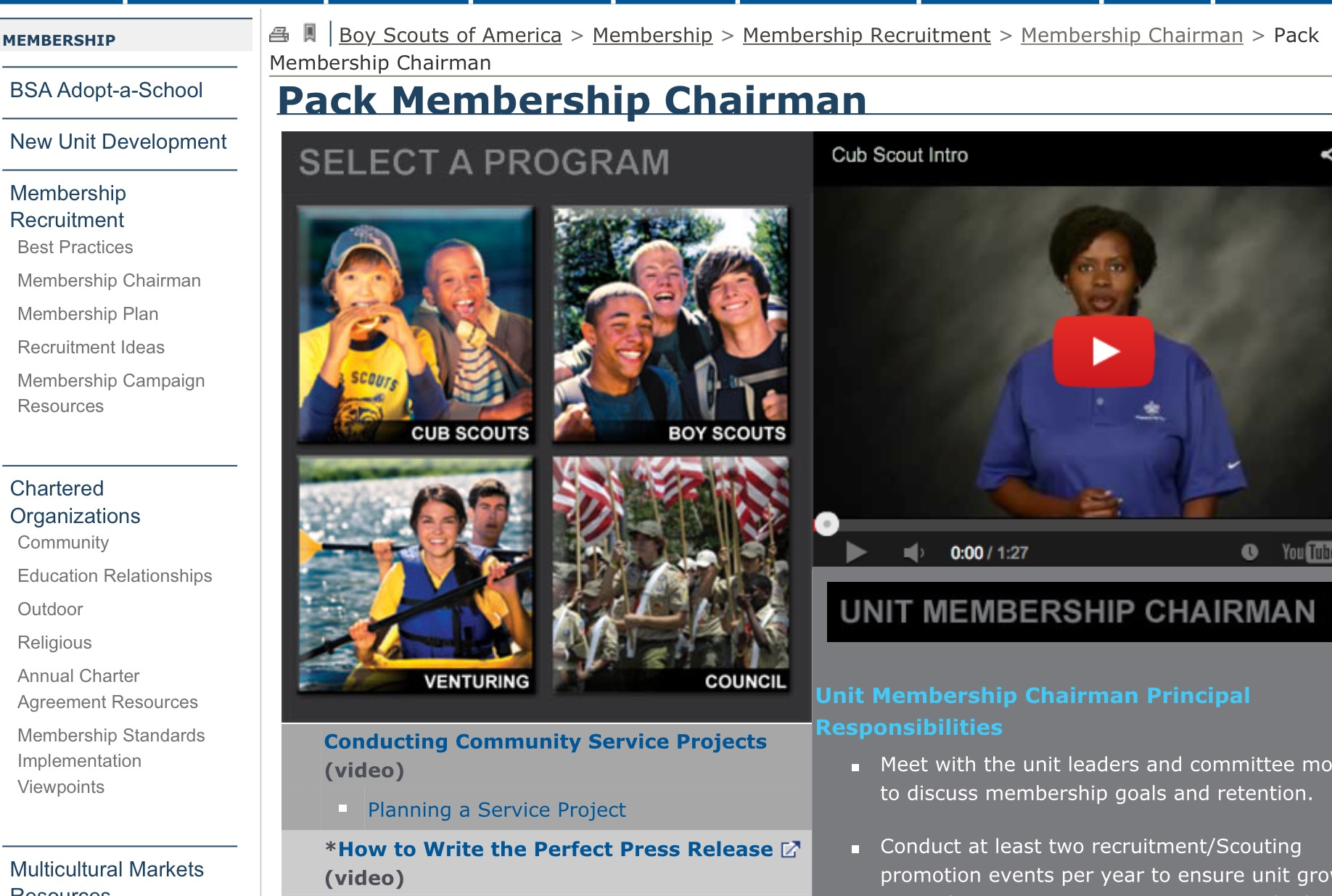
BSA has put together a wonderful website for all packs, troops, and crews to be able to use for different recruitment purposes. There are even YouTube videos for the membership coordinator to learn their job. This is different than the usual E-learning process because there is no login required.
Take a look at this website to find out what you can do to improve your recruitment this fall.
 CAC North Star Unofficial Website
You must be logged in to post a comment.