
Adult Education
Why the Patrol System Teaches Empathy
We, as scouters, are all familiar with the emotional growth that scouts obtain from being involved in outdoor activities. How do you describe why it works? Often scouters struggle to explain what they have witnessed to be true. We need to be able to describe why this works if we are to be able to persuade new families to join. Let’s take a look at what types of activities promote personal emotional growth.
Ultimately, well-run scout units are boys-at-play not boys-at-school-outdoors. If that is so, may be this explains why scouting works:
Closely related to the increased pressure to achieve is the decline in play. [] Over the past several decades, we have witnessed a continuous and, overall, dramatic decline in children’s freedom and opportunities to play with other children, undirected by adults. In other essays I have linked this decline to the well-documented rise in depression and anxiety among children and adolescents (here) and to the recently documented decline in creativity (here). Free play is the primary means by which children learn to control their own lives, solve their own problems, and deal effectively with fear and anger—and thereby protect themselves from prolonged anxiety and depression. Free play is also the primary means by which children maintain and expand upon their creative potentials. Now, I suggest, free social play—that is, play with other kids, undirected by adults–is also the primary means by which children overcome narcissism and build up their capacity for empathy.
Play, by definition, is always voluntary, and that means that players are always free to quit. If you can’t quit, it’s not play. All normal children have a strong biological drive to play with other children. That’s part of human child nature—an extraordinarily important part of it. In such play, every child knows that the others can quit at any time and will quit if they are not happy. Therefore, to keep the fun going, each child is motivated to keep the other children happy. To do that, children must listen to one another, read into what they are saying, and, in general, get into one another’s mind so as to know what the other wants and doesn’t want. If a child fails at that and consistently bullies others or doesn’t take their views into account, the others will quit, leaving the offending child alone. This is powerful punishment that leads the offender to try harder next time to see from others’ points of view. Thus, in their social play, children continuously practice and build upon their abilities to empathize, negotiate, and cooperate.
Moreover, children, unlike adults, are rarely effusive in their praise of one another. They have little tolerance for anyone who thinks that he or she is “special,” or is in some way above the rules, or is a natural leader who should get his or her way all the time. Playmates are often highly skilled in deflating one another’s egos, through such means as humor and insults, or through outright rejection if those means fail.
Consistent with this view, correlational studies have revealed that children who engage in more social play with other children demonstrate more empathy, and more ability to understand the perspective of others, than do children who engage in less such play.[6] Moreover, several short-term experiments conducted in preschools have shown that when some children are provided with extra opportunities to engage in social play, those in the extra-play groups later exhibit higher performance on various measures of social perspective-taking and ability to get along with others than do those in the control groups.[7]
Boys setting up their own terms of play provide emotional development benefits because they have an incentive to adapt. The incentive is the desire to keep others involved. They don’t seek out or give effusive praise — often quite the opposite. Yet, these unstructured opportunities provide real opportunities to foster empathy and understanding.
What lessons do we learn as scouters? In the last post, I suggested that adult-guided activities, especially in sports, have a much higher incidence of injury, requiring medical attention, including orthopedic surgeries. Now we see that emotional growth is greater where youth-led activities are allowed, including juvenile insults. The more time for unstructured interaction is allowed, the greater opportunity for growth.
While many of the points in the excerpt above focus on “free-play” for young children, the lessons for emotional growth are the same as children become teen-agers. They need time to face challenges together and have arguments where they face the risk of the other kids giving them the ultimate juvenile punishment: non-participation. If a patrol leader is overly controlling and lack in empathy, his patrol will find anything else to do than follow the patrol leader’s instructions. The patrol leader may or may not learn quickly, but he has the opportunity to learn that dictatorial methods fail.
The patrol leader who leads by example will learn to be a better leader. When the duty roster is made, the good patrol leader will give himself the least desirable job first: latrine or KP duty or the patrol’s least favorite. The patrol learns that he has more credibility when he can say, “I understand it is not fun. I did it yesterday. Come. I’ll help you figure out how to do it faster.” His patrol will get tasks done.
So what is going to give your scouts the greatest opportunity for growth? A weekend campout that appears to be completely chaotic and unstructured? A high-adventure trip led by adults and planned down to the minute?
With these tools in mind, how would you explain that the patrol system is the reason that a prospective scouting parent should have their son join Scouts?
Cub Pack Committee
One of the first signs of trouble in the health of a Cub Scout Pack is that Cubmaster is heavily involved with the parents.
The Cubmaster, like his Scoutmaster equivalent, has the primary responsibility for taking care of the boys and coordinating the efforts of the Assistant Cubmasters and Den Leaders. He is the head of the Operations Department of a Cub Scout Pack.
So who takes care of the parents? The Pack Committee Chair. He or she is crucial to allowing the Cubmaster to provide a good program to keep the boys interested. If the Cubmaster is handling most of the phone calls and emails from the parents, the Cubmaster is going to waste his volunteer time that should be spent on the boys.
July Roundtable Postponed a Week for Holiday
Please note that July’s Roundtable will be on July 9th at the same time and place, not the usual date.
We will hold a general session for all attendees at 6:30 pm. At the close of general session, Cub and Scout Roundtables will be held.
Training for Chartered Organization Representatives and Representatives-Elect will be held at the same time. (RSVP’s requested for training.) This training is mandatory for a COR to be “Trained.” Our goal in North Star is 100% Trained-COR’s by the completion of this year’s Rechartering Process.

Scouting with the Handbook
“Do you have your handbook?” How many times at meetings have you asked this question?
As a passionate scouter, I enjoy the opportunity to interact with the scouts. As I sit to reflect about how to improve my skills, I often wonder if my passion is getting in the way of truly allowing the boys to play the game of scouting.
The story of the spread of scouting in the early 1900’s keeps coming to mind. There were two parts to the process: boys naturally grouping together in patrols to camp and play the game of scouting versus the adults trying to promote its spread for their own purposes. Each has furthered scouting.
District Training Status
One of the key duties of District is to encourage units to improve their programs in order to make the scouting more inviting to boys. BSA offers training for each position in order that adults can better understand the duties that they have accepted. Training is required for Rechartering.
Council records training records to be able to find out where training needs to be encouraged.
Among our units district wide, our training rate looks like this (if you are registered for more than one position, you can be trained and untrained simultaneously, appearing on this chart for each):

The pattern is clear. Units in Zionsville and northern Pike Township tend to have adult leader ship rates well over 50%. Moving toward the south and east, training rates plummet to the point where some units have no properly trained leaders.
Saturday’s “Ideal Year of Scouting”
Saturday is the annual training for “Ideal Year of Scouting.” Assistant Director of Field Services Darin Stendl reported at Roundtable last night that this is designed as an “open house.” This means that you can show up at the time that is convenient for you. There will be training sessions all morning and vendor booths available. These vendors will be happy to discuss what opportunities they have your youth.
The event takes place at Golden Burke Scout Service Center from 9 AM to 1 PM this Saturday.
This program is ideal for unit leaders, committee members, and the Patrol Leaders’ Council. Every unit should send a representative!
For more information, see the Crossroads of America Council website.
Useful Camp Gadgets as Teaching Aid
As we arrive at our Ransburg campsite, the Firecrafter phrase “useful camp gadget” appears. For new scoutmasters, this seems to be a unique phrase. It is as mystical is the idea of “scoutmaster.”
In fact both of these phrases go back over a century. A scoutmaster is a reference to the 19th century word “master,” which was short for “school master.” The schoolmaster had a master’s degree, which gave him the authority to teach bachelor’s degree candidates. Baden Powell picked up on this notion of a master-as-a-teacher when he named “scoutmasters.” Simply this was a teacher of scouts. Scoutmasters were assumed to have deep knowledge of a particular area, scout craft. The biggest part of this was woodcraft.
Committee Planning Session
I look forward to planning with you on June 11th at St Luke’s UMC. This will be an opportunity for us to begin to gel as a team. North Star will once again rise to it’s #1 status in this council. What a great bunch of volunteers! GO NORTH STAR!
District Committee Planning Session June 11th
All members of North Star District Committee should attend Committee Planning Meeting.
To that goal, Vice President of District Operations Stroh Bronn and Director of Field Services Rob Hemmelgarn will be leading this session on the evening of June 11th. The session will be held at St. Luke’s United Methodist Church, Room N101 (the same room as the May District Committee Meeting). The class will begin at 7:00 p.m.
Cub Scouts for kindergarteners?
One of my son’s fellow Cub Scouts had a father a bit older than me. The father still had his Cub Scout shirt from the 1960’s with the Lion Cub Rank. This was the predecessor to the Arrow of Light and Webelos program. Webelos originally meant “Wolf, Bear, Lion: WBLs.”
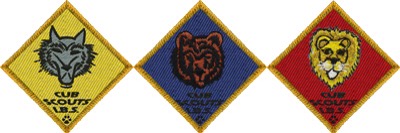
In 1971, our current program started with the Tigers phased in the 1980’s.

Now BSA is pilot testing a reintroduction of the Lion rank. Instead of the highest rank, Lion would be a new rank for kindergarteners, similar to the Girl Scouts’ Daisies. Minnesota’s Northern Star Council was first. It has now expanded to the Garden State Council and Western Massachusetts Council.
- ← Previous
- 1
- …
- 13
- 14
- 15
- Next →
 CAC North Star Unofficial Website
You must be logged in to post a comment.